Fishbowl Preview

Release Date: TBA
Platforms: PlayStation 5, Steam
Regular Price: TBD

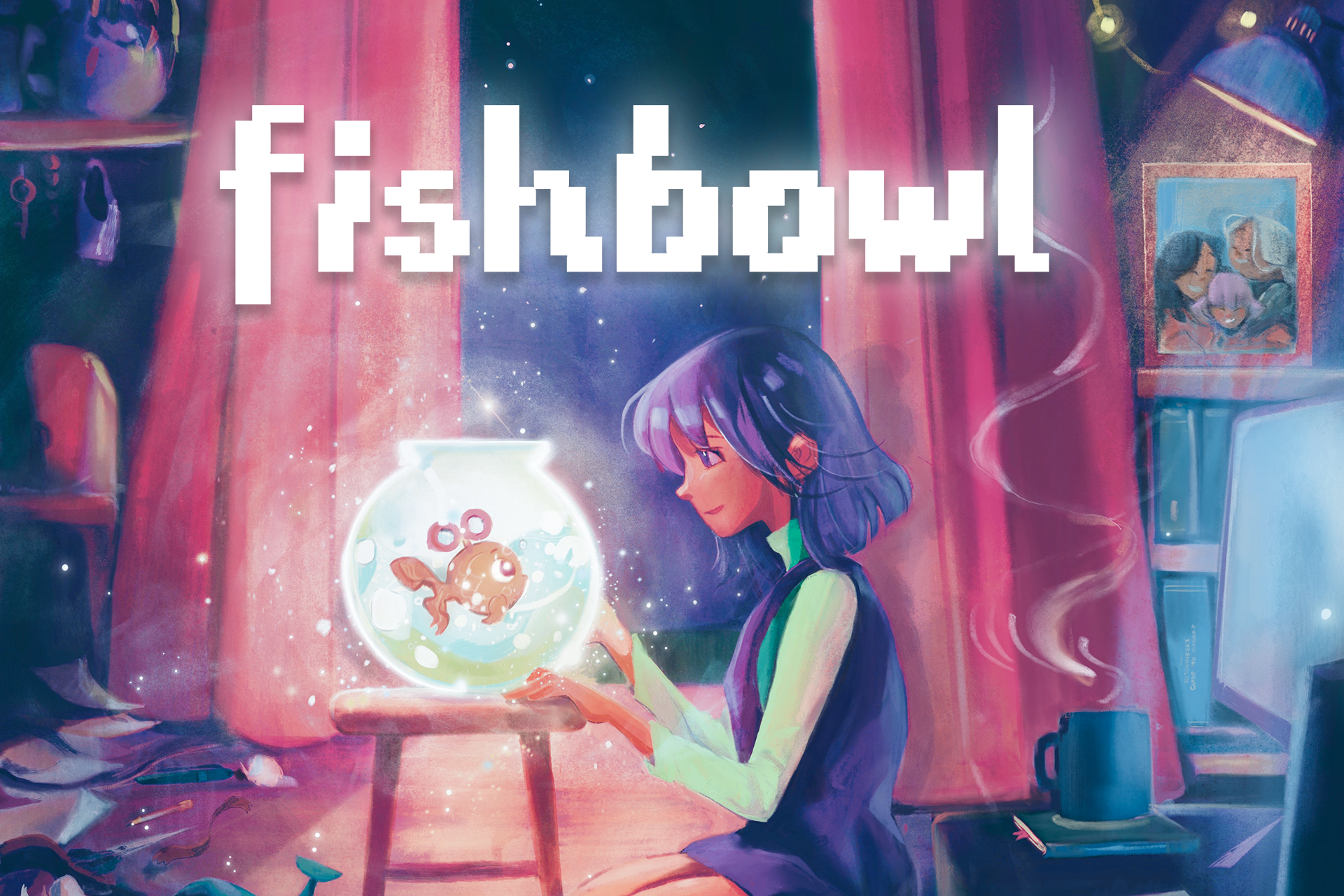
When I first launched the Fishbowl demo, I didn’t expect it to automatically hit quite this hard emotionally. Developed by imissmyfriends.studio, a two-person indie team from India and published by Wholesome Games Presents, Fishbowl is a narrative game about dreams, grief, and hope — all wrapped in cozy pixel art and quiet, heartfelt storytelling. The full game is set to release in April 2026, and if the demo is any indication, this is one I’ll be watching closely.
From the very first moments of gameplay, it’s clear that something heavy lingers in the air. Even before the real story begins, the content warning hints at loss — and soon enough, we find out that Alo, our main character, has recently lost her grandmother (affectionately known as Jaja). Her mom calls her Baby Potato, which immediately melted my heart. The writing is warm, tender, and layered with cultural detail that makes the story feel real and lived-in.
Cozy Details and Cultural Roots
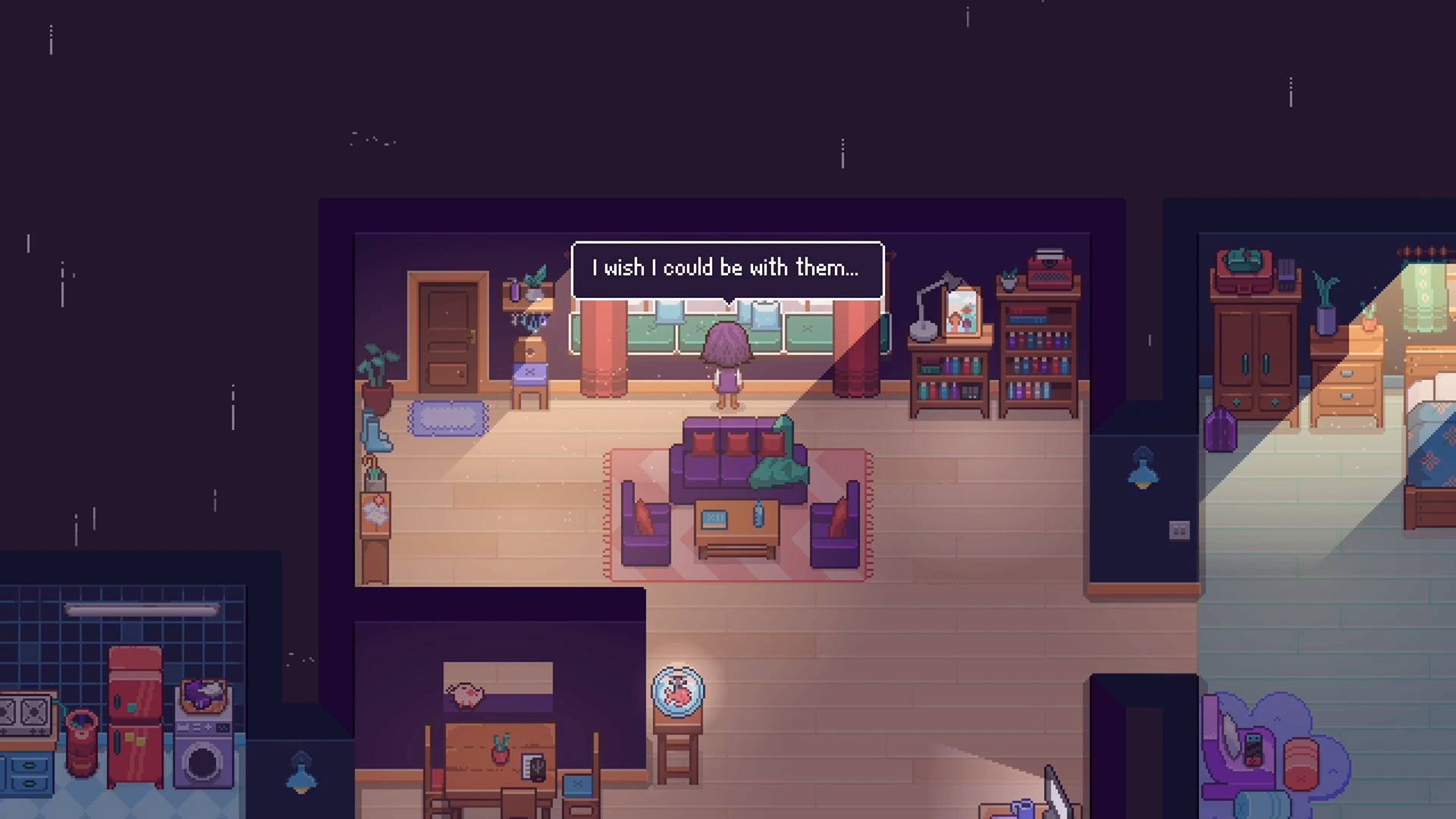
The pixel art is gorgeous!! Soft, detailed, and full of personality. Even the little bubble text sounds feel nostalgic, giving me Stardew Valley vibes in the best way possible. The touches of Indian culture, like the mention of mulmul sari, make the world feel personal and rooted. I’m not from that background myself, but I could still feel the care and love poured into every detail. You can tell this game means something deeply personal to its creators, and I can feel that love and passion through the screen.
Alo works as a videographer/Editor, which instantly clicked with me — someone editing, reflecting, and carrying the weight of feeling like they “might not deserve” their new job... I've been there. That push-and-pull between imposter syndrome, depression, and the need to keep moving hit close to home. As someone who turned to online gaming to get through my own rough patches and grief in life, Fishbowl resonated with me on a very real level.
Small puzzles, Big Heart
One thing that surprised me was how many puzzles and minigames are packed into the demo. They’re simple but not overly repetitive, which keeps things dynamic. Even Alo’s “work” — editing a video — turns into a mini-game. That kind of interactivity made me feel like I was living in her world rather than just reading it.
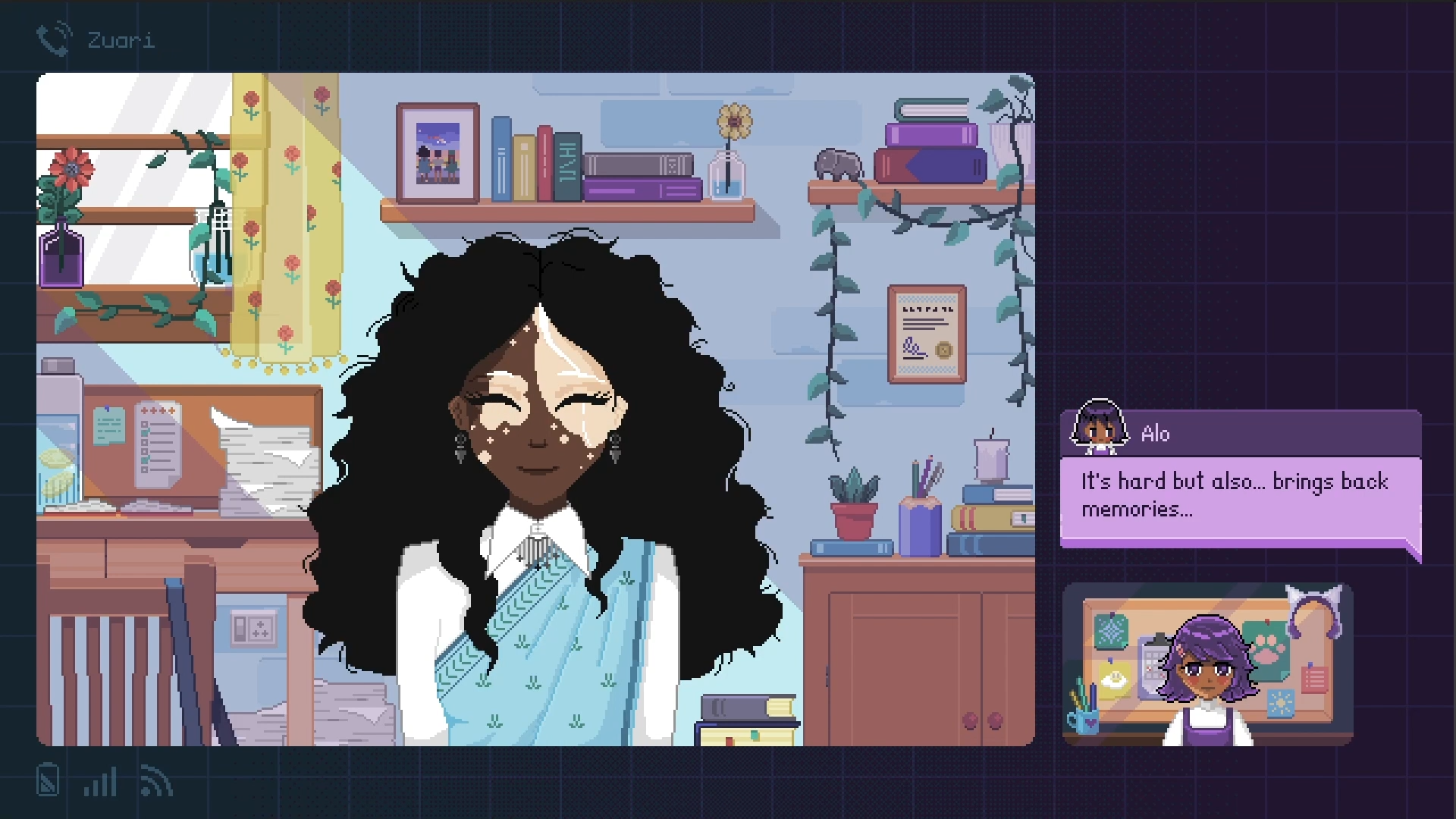
Between editing sessions, you can explore Alo’s apartment, eat a meal, and take calls from her friends that help progress the story. These scenes really shine when we meet Zuari, a teacher and Alo’s friend, whose design is absolutely stunning. She has what looks to be vitiligo — a detail you rarely see represented in games — and it’s handled with natural grace. The diversity in character designs and skin tones is refreshing and feels intentional.
There’s also a subtle throughline about living through and after COVID, with hints about working from home and social distancing. It’s never heavy-handed, but it lends the story a reflective, almost time-capsule quality. Now six years later, it’s wild to see games quietly acknowledge that shared experience we all lived through.
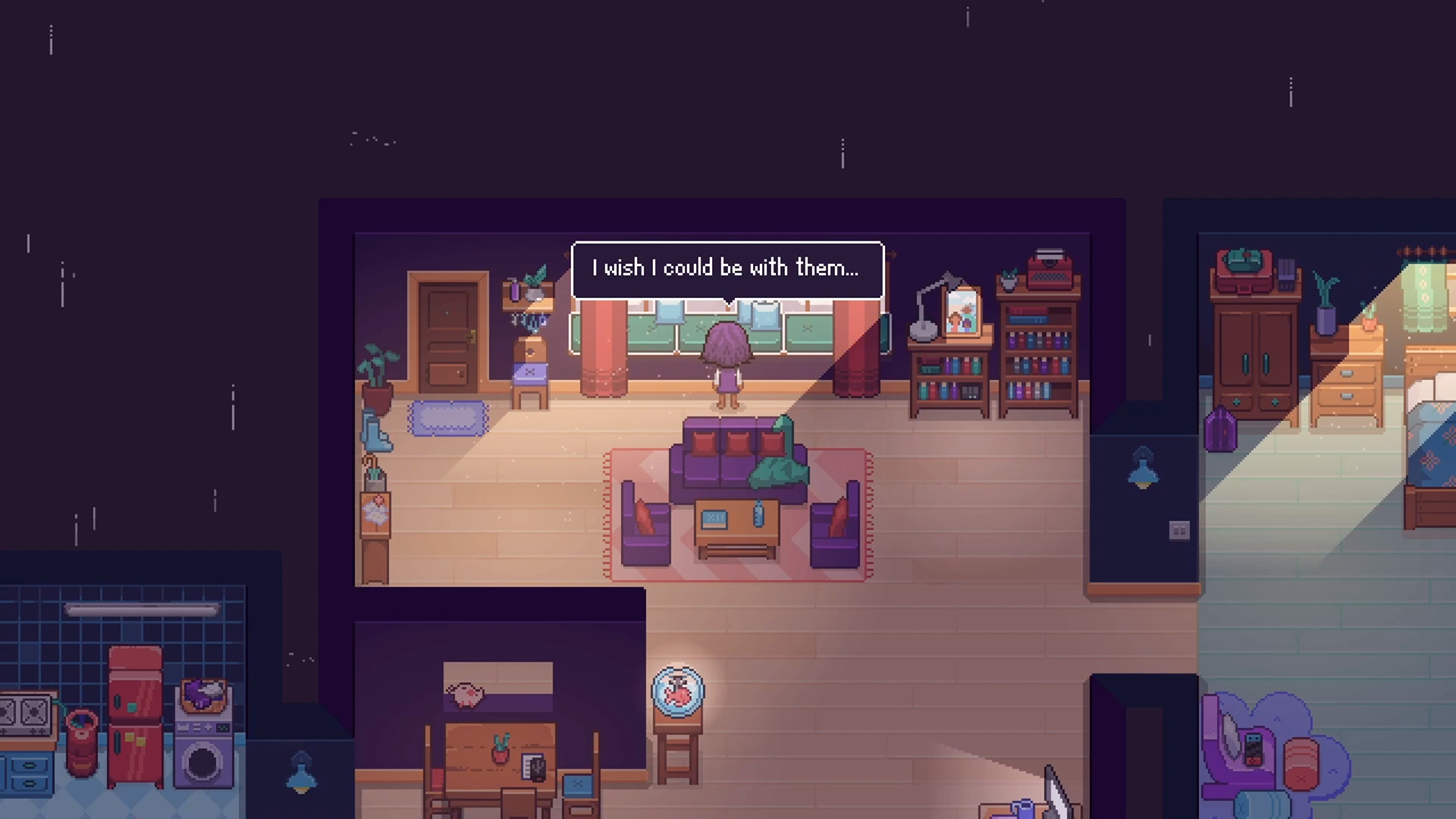
Game Features:
- Video call a diverse cast of characters with branching conversations
- Work from home with a fun matching video editing game
- Rediscover memories by solving unpacking puzzles
- Do your best with home & self care — or just do as much as you can
- Experience beautiful, hand-drawn pixel art and cozy lofi soundtracks
- Make decisions, uncover the past, and figure out life one day at a time
- In Fishbowl, feel all feelings — there are no right endings
A Story That Gently Breaks You
Throughout the demo, letters, notes, and dreams unravel pieces of Alo’s grief. The arrival of Paplet, a talking toy fish from her childhood, treads that surreal line between comforting and uncanny. Fishbowl isn’t afraid to sit in sadness, but it always offers small comforts — a home-cooked meal, a package from a friend, or a simple message before bed: “No matter what, you got through the day.” That line stayed with me long after playing.
By the time the demo ended (after about an hour), I didn’t want it to. The mix of storytelling, emotional honesty, and soothing gameplay left me genuinely moved. It’s rare for a game to feel this human — but Fishbowl manages to be both heartbreakingly intimate and quietly hopeful.
I’ve already added it to my Steam wishlist, and if you love cozy narrative games that explore real emotions with warmth and care, you should too.