Two Falls (Nishu Takuatshina) Review

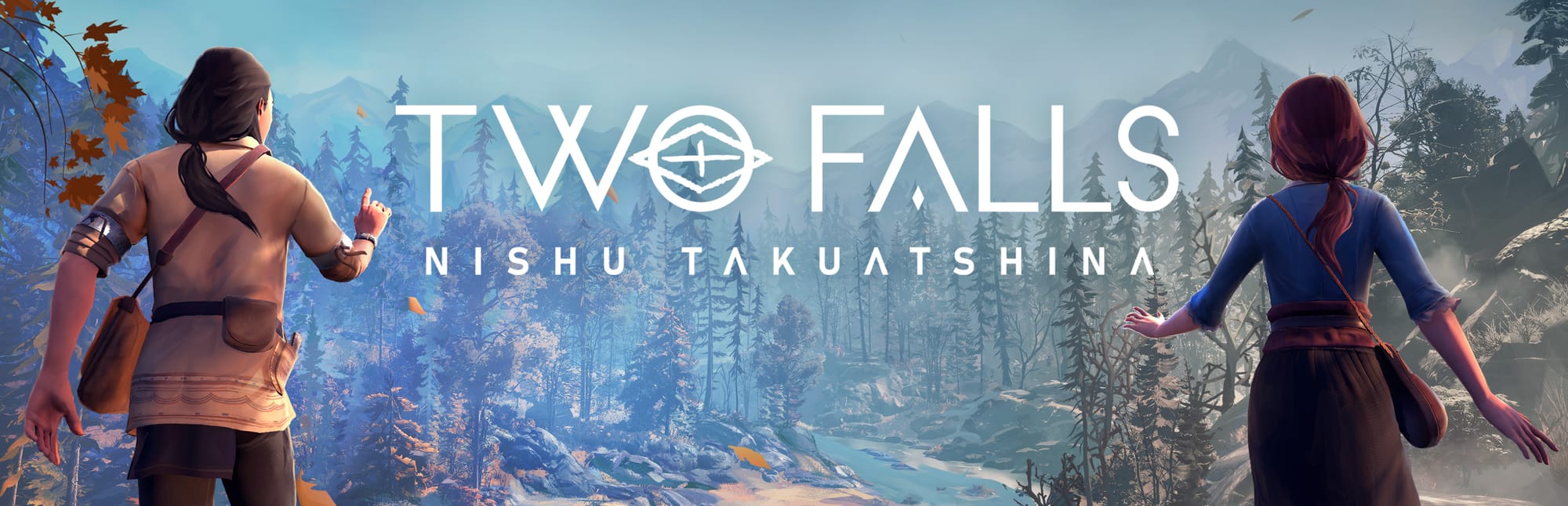
Two Falls (Nishu Takuatshina), created by Unreliable Narrators (a team of storytellers obsessed with narrative-driven games), still lingers with me weeks after my first playthrough. Set in the early 17th-century Canadian wilderness, it follows Jeanne, a shipwrecked French woman desperate for a fresh start, and Maïkan, a young Innu hunter sensing something dark creeping into his ancestral forest. Their paths cross in ways that feel achingly human, forcing reckonings with faith, culture, and survival that hit even deeper now.
Looking back, the narrative is definitely the soul of it all. The game allows you to live through Jeanne and Maïkan's intertwined journeys from each perspective, making heart-led choices that shape Jeanne's rigid faith into something more questioning, or harden Maïkan's trust in outsiders... or soften it. At it's core this game is not about right vs. wrong; it's watching flawed people grapple with each other's worlds, cultures, and breathing understanding into our still-so-divided 2026 reality. The team's passion pours through every scene, educational yet never stuffy, like they're whispering hard truths with love.

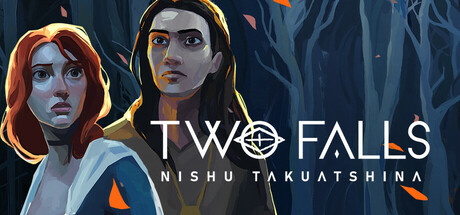
What elevates the storyline is the nuance—no villains twirling mustaches (ok maybe one or two villain leaning characters), no Indigenous saints. Jeanne's Christianity clashes with Maïkan's land-tied spirituality, but moments of raw empathy sneak in, fostering that quiet hope without saccharine endings. Through additional characters in the game, like Pierre, we get to really reflect of all the grey-area that was happening in real time in Canada's early history. It's the kind of tale that makes you pause the game to think, then mull it over and find the perspective of each charater.
Hindsight sharpens how authentic this feels, built from the ground up with Indigenous talent. Writer Isabelle Picard (originally from Wendake) shaped the script, Awastoki handled art direction and 3D, Eadsé composed the haunting score rooted in traditions, plus actors and a Council of Elders advising on what stories to lift up. You see it in Maïkan's rituals, the forest's sacred pulse, characters like Tehonwastasta who defy stereotypes. No outsider gaze diluting the pain or resilience—it's community survival, told tenderly, dodging misery fluff for something real and restorative.
Features:
- Dual Perspectives: The game gives you alternate chapters between Jeanne and Maïkan. This makes the same spaces feel worlds apart, vibrant/sacred for him, bleak/hostile for her, hammering home how bias colours reality.
- Choice-Driven Traits: We get to choose our replies in many scenarios. Dialogue picks slide personalities (e.g., Jeanne's faith: dogmatic or open; Maïkan's: welcoming or wary). There are no massive branches, but they provide meaningful arcs that ripple subtly.
- Linear Exploration: 4-6 hours of first-person walking/investigating in Unreal Engine 5 wilderness. Contemplative pace, no combat or puzzles, all about immersion and discovery.
- Post-Choice Feedback: Big decisions labeled after you commit (e.g., "Questioning Faith"), keeping you in the moment without spoilers.
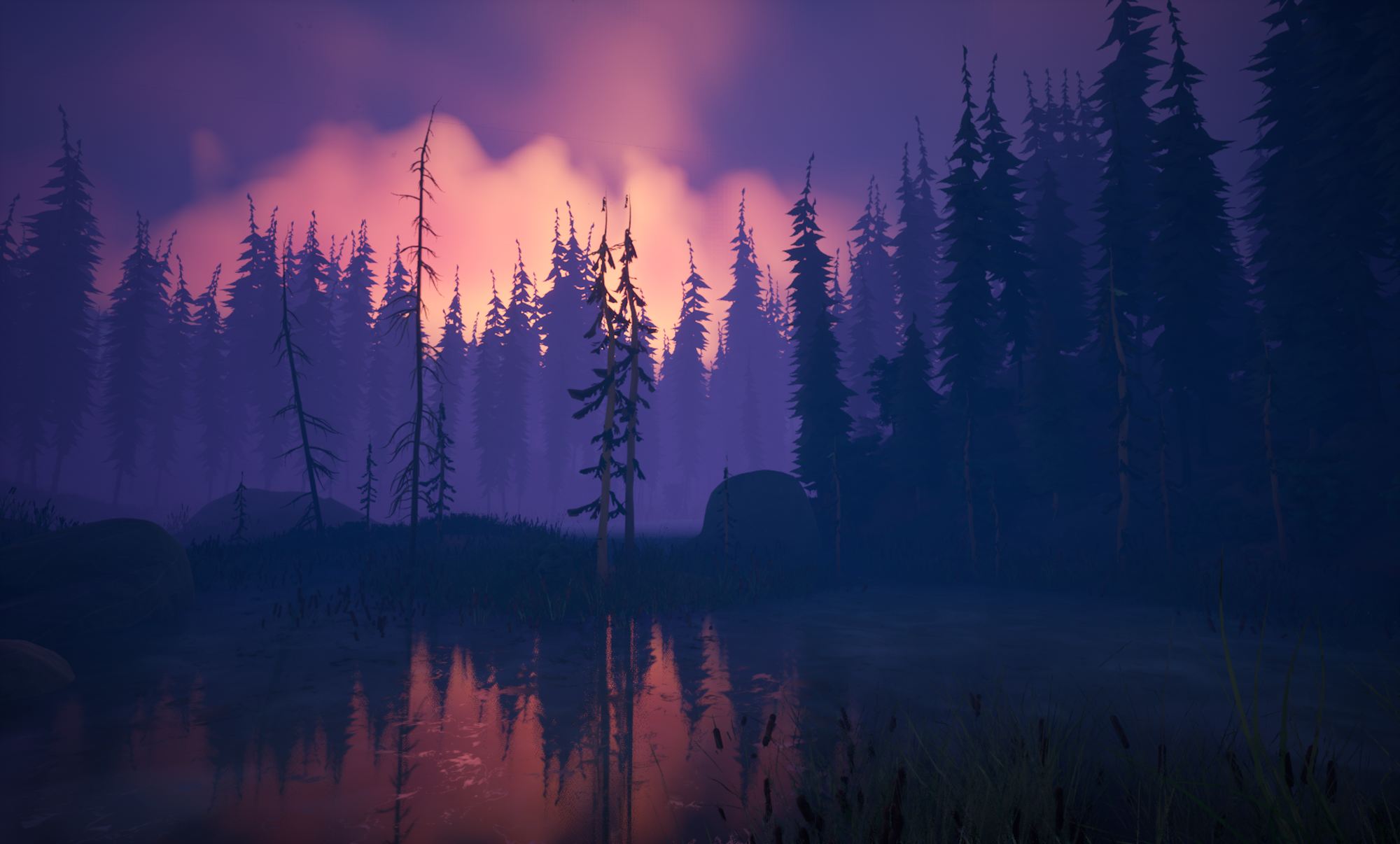
- Artistic Split: Stylized, storybook visuals and sound. Indigenous-rooted music swells emotionally; forests glow with painterly detail, though human models/animations show budget limits (stiff faces, occasional pop-in).
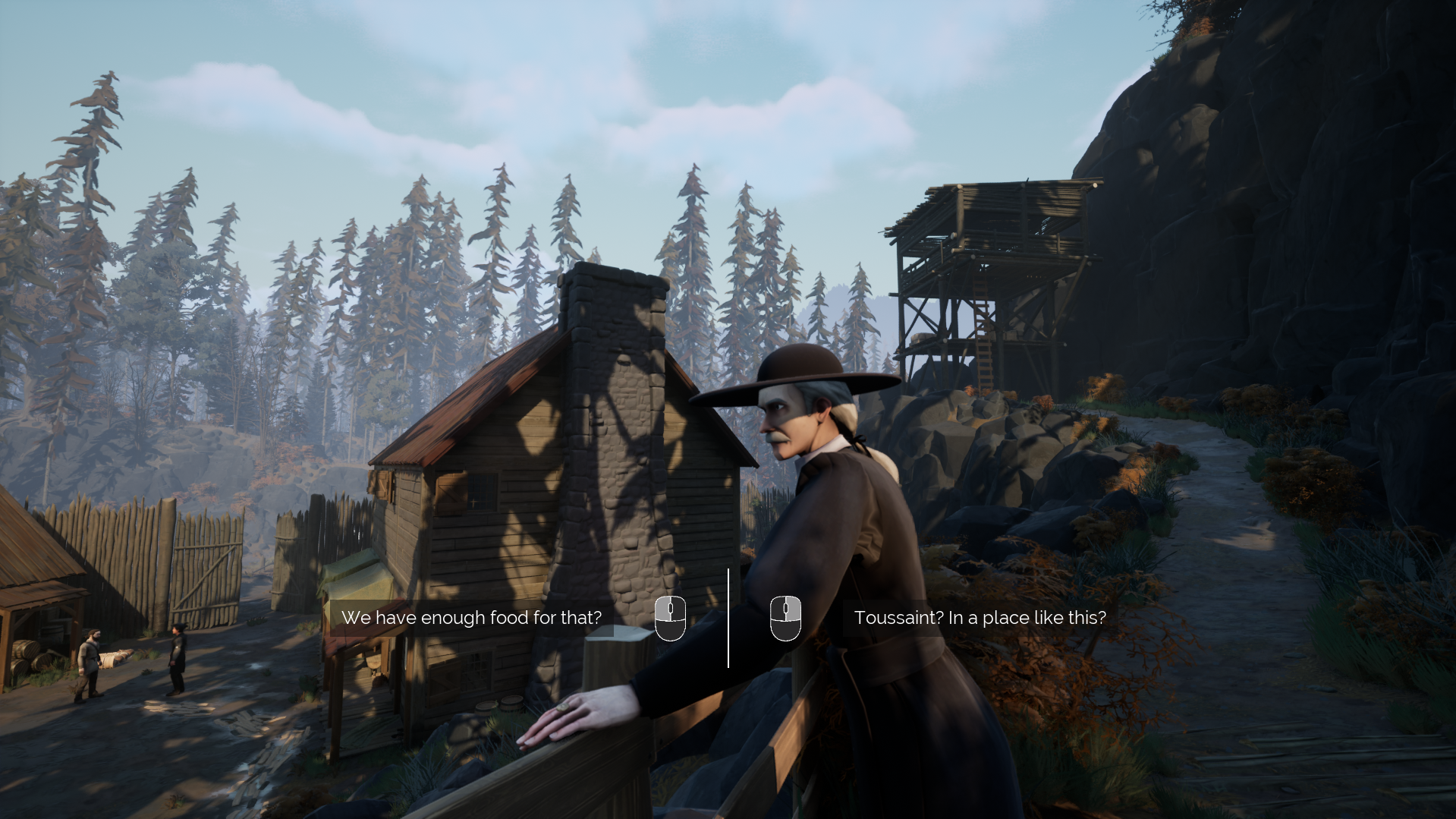
For me, it played very smooth on PC. There were some great aspects that let you poking around misty woods or camps, but some repetition in traversal and light accessibility gripes (no Indigenous audio dubs, limited subs) keep it from being perfectly flawless.
The game grounds its fiction in real 17th-century tensions, basically early French-Innu encounters amid the fur trade and Jesuit missions.
- Innu Context: Maïkan's people (Innu) hunted caribou across Nitassinan (Quebec/Labrador), facing smallpox and settler encroachment by the 1600s; the "blight" echoes real ecological disruptions from over-trapping.
- French Settler Reality: Jeanne embodies those Atlantic-crossing women via filles du roi programs (1663-1673), shipped to "populate" New France, often amid shipwrecks and harsh winters.
- Cultural Clashes: Ceremonies draw from actual Innu shaking tent rituals for guidance; French faith mirrors Jesuit pushes that sparked Beaver Wars violence, blending hope with the genocide backdrop.
- Modern Tie-In: Echoes Truth and Reconciliation calls, with that opening text nodding to ongoing activism against residential school legacies—timely as ever in 2026.
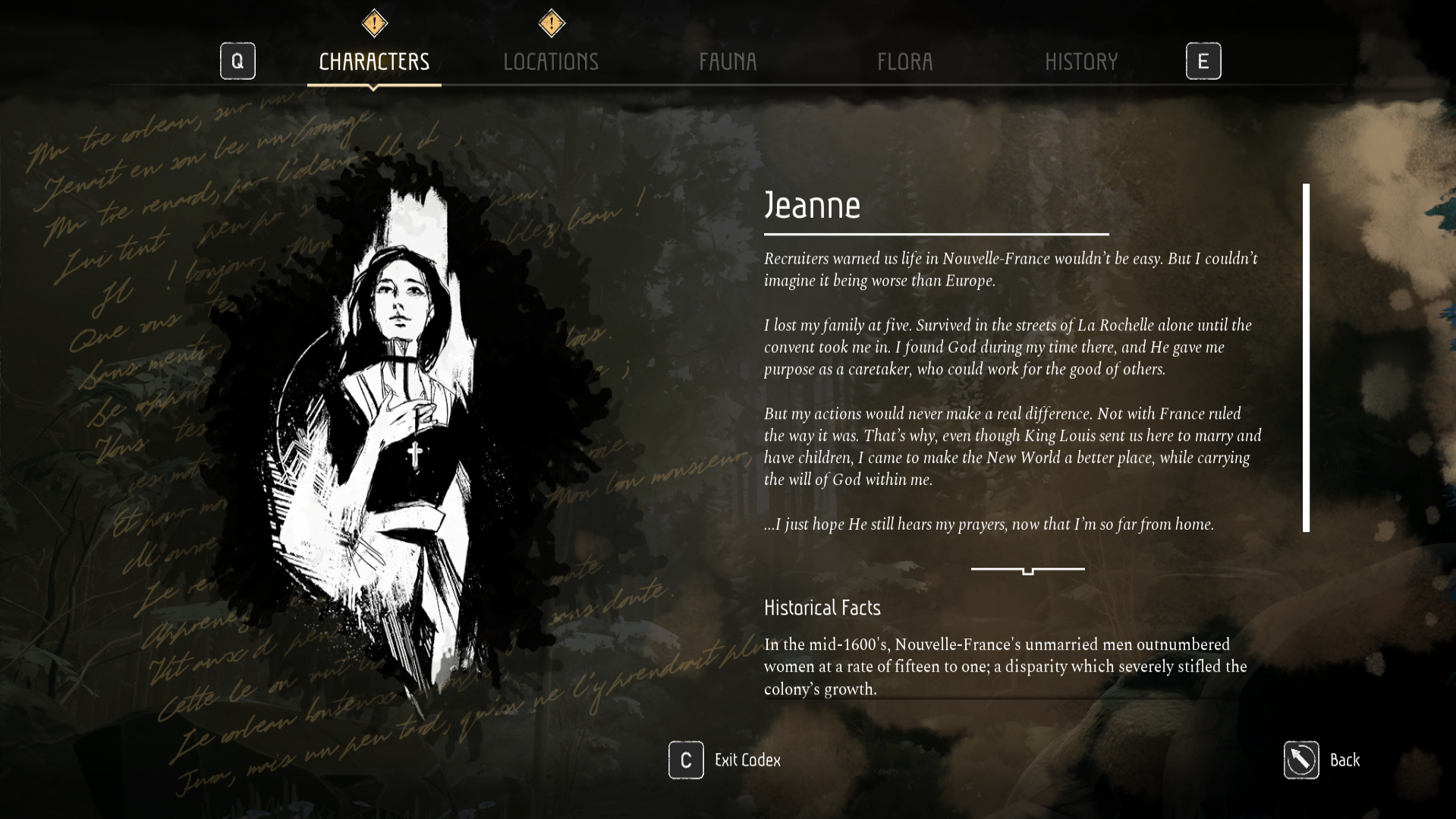
These aren't dry facts; they're lived in the world, educating through feel. What I really liked is that the addition of a codex in the game provided a TON of historical information to anyone who wanted to learn more.
Unreal Engine 5 delivers those dense, light-dappled forests beautifully, winter haze, rustling leaves, but character close-ups reveal the indie scale: expressions can sometimes fall flat, animations jitter in spots, and load times can lag. Sound design carries it though, that melancholic score lingering like fog. At 4-6 hours, it's a novella, not an epic, perfect for savoring, though spectacle-chasers might not like the restraint of controls.
Two Falls lands as this near-masterpiece narrative that prioritizes heart over polish. It's hopeful without naivety, a bridge-building story I'm glad exists, especially when games like this nudge us toward empathy in tough times. Rough edges and all, it earns its spot in the conversation.