Winter Burrow Review


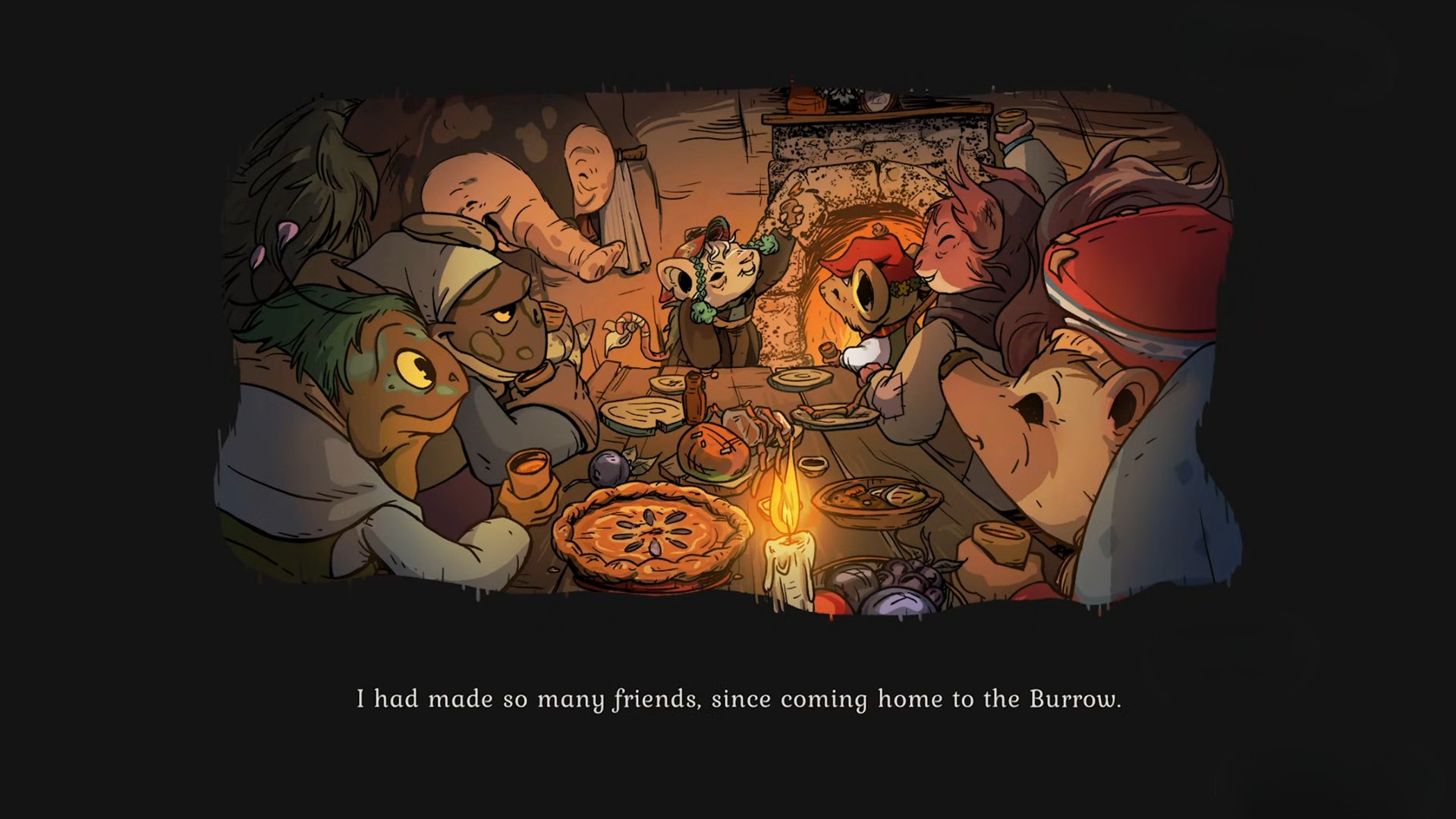
Winter Burrow developed by Pine Creek Games is best enjoyed as a quiet, self-contained story rather than a complex survival sim. With its hand-drawn art style, it feels very much like reading a story before bed. The game starts strong with emotional turmoil within its narrative setting. You are introduced as a mouse who has recently lost their parents after moving to "the big city" and moved back into their old house in the forest alone and in search of their aunt. It’s a simple story, but one I enjoyed. Narratively, Winter Burrow uses a classic “return to the haunted house” setup, but the ghosts in this story are emotional rather than literal. The missing aunt, the ruined home, and the cold isolation amidst the Winter season create a story that feels more like an intimate drama than a typical “save the world” game.

Crafting and game mechanics in Winter Burrow are pretty simple, but that’s kind of the point. It’s not trying to be some hardcore survival sim with endless systems to master. I played through on my Nintendo Switch 2 and, performance-wise, it ran VERY smoothly. However, I kept wishing for larger text or better navigation tools because sometimes I just couldn’t find where I needed to go, which led me to putting the game down for a break more than I should have. The runtime is around 6–8 hours, depending on how much you mess around or just want to hang out in your burrow. The pacing feels natural if you see it as a short, focused story about grief and coming home, instead of some endless, replayable life sim like other popular games of the genre.
At first, I did have a hard time moving around using my Joy Cons, constantly getting stuck on assets while running through the burrow or forest (sorry, I’m a mouse and keyboard girl), so I’ll admit some of my frustration was probably just me being a total noob with handheld controls. But once I got used to it, things smoothed out. The crafting itself is mostly about completing tasks. Moss the mole wants berries, Gnawtusk the squirrel needs nuts, and you’re basically just collecting and crafting to keep everyone happy. It’s satisfying for a bit, but you don’t really get that deeper sense of progression or mechanical depth that keeps you hooked for dozens of hours.
Your journey in the game is not about making big choices, but about taking small steps forward to better your current situation. Something cozy gamers should be VERY used to in this genre. The game’s main play loop of going out, gathering, braving the cold, and coming back to warmth makes sense and feels very natural to the game. At first, you feel anxiety and are in survival mode, but soon it becomes routine and finally feels almost calming. Its doing things one small task as a time that by the end all come together to show the growth of us as the player... and quite intentionally highlights that it's not about the games end but its about the friends you make (or find) along the way.
The game does not distract its player from the main emotional plot, but instead keeps you centered on the main story There are no complex side stories with the neighbors. The downside is that the supporting characters, like Moss the mole and Gnawtusk the squirrel, don’t develop much throughout the story. They are there only when needed to further our story.
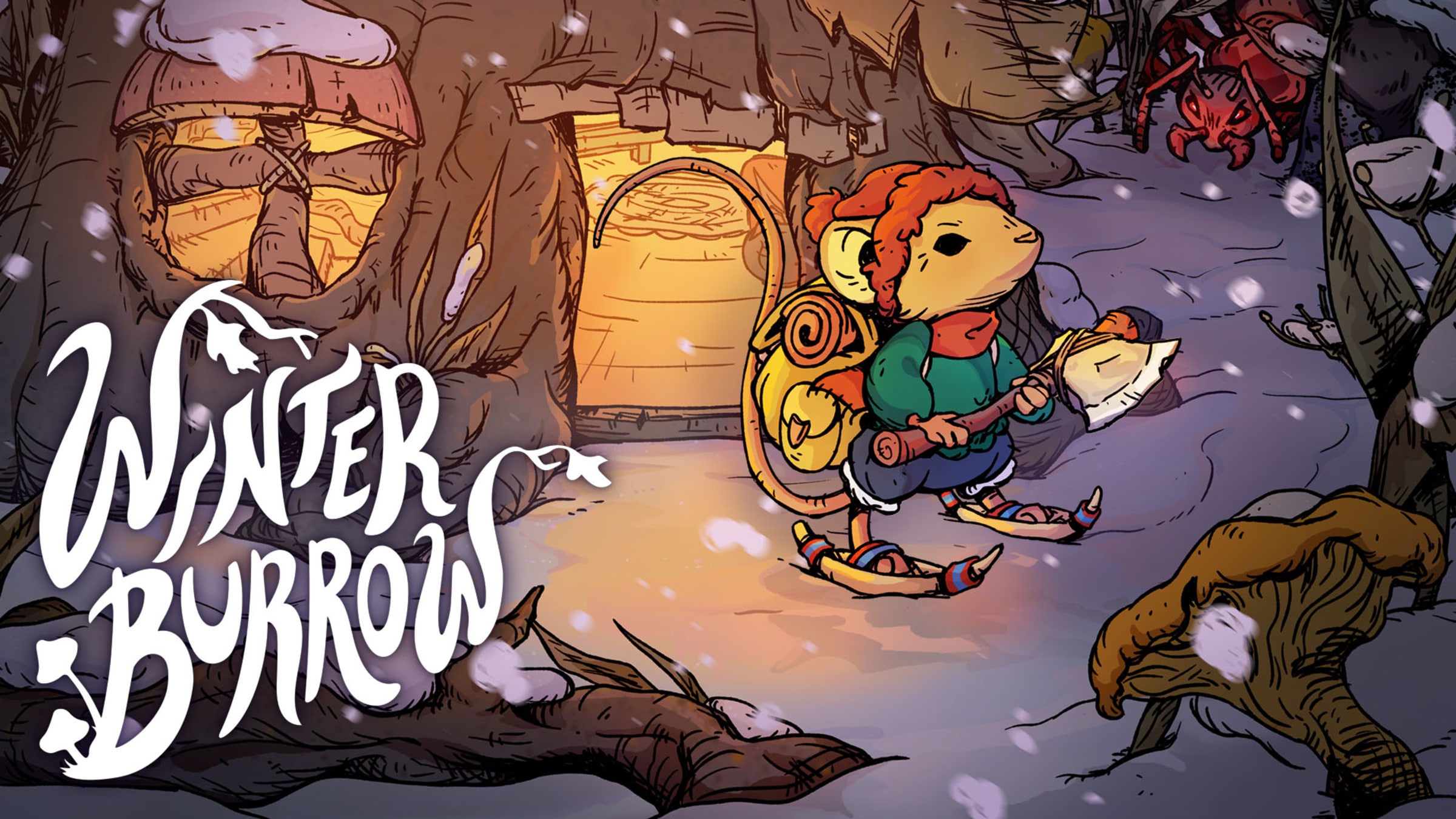
Winter Burrow’s art direction, in my opinion, was beautifully done. If you are a fan of games like Don't Starve and Don't Starve Together, the art style (and gameplay with the games crafting system) will feel right at home. In relation to the story itself, the way each space is designed reveals as much about the main character’s feelings as the story itself. At first the burrow is messy, broken, and dark, making the mouse seem small and lost in the space. As you fix it up those same rooms start to become warm and balanced, showing the character finally fitting in.In contrast, the forest is shown with wide, open views. The POV pulled back, almost like looking at a diorama, which reminds you how small you are in the world. This feeling matches the vulnerability of a character coming home after a hard time. One thing I liked is that the visuals always balance safe, warm spaces with cold, open, and uncertain ones.
But since the game’s challenges are mild, the pacing often felt flat. There aren’t too many moments of sudden tension, no close calls where you barely make it home, and no big changes in the rules that would make you see things differently. The steady flow of tasks fits the cozy mood, but in my opinion limits the drama. If the survival or story risks increase later on, the ending of this story could feel more like a true climax rather than just hinting at one.
Winter Burrow shines, however, in how its gameplay matches its themes, even if it means the systems aren’t very deep. The gentle survival style of the game does fit the story’s main message: this world doesn’t inherently want to punish you, but encourages you to try, fail, and rebuild. Passing out in the snow and waking up safely at home will feel right at home to players who enjoy games like Stardew Valley or Sun Haven. less like “you died” and more like being overwhelmed, taking a break, and then trying again.
Still, from a critical view, the strong themes don’t make up for the simple gameplay. As a game I reviewed on Nintendo Switch 2, which caters to a younger audience, I appreciate the gentle approach and safe emotional space that kids can still enjoy, but you’ll also notice the missed chance for deeper tension. Imagine if the weather really changed your path, or if your choices about helping others or rebuilding changed the story’s mood. While the story works, I can't help but feel that it was mostly in one tone. Winter Burrow understands mood, framing a story, and emotional subtext, but never really experiments with its own language the way I would have liked. It’s thoughtful, visually articulate, and occasionally poignant...just not ambitious enough in its mechanics or narrative structure to step from “good” into “great.”