MSI Claw 8 EX AI+ CG3EM Preview: The Best PC Gaming Handheld Yet?

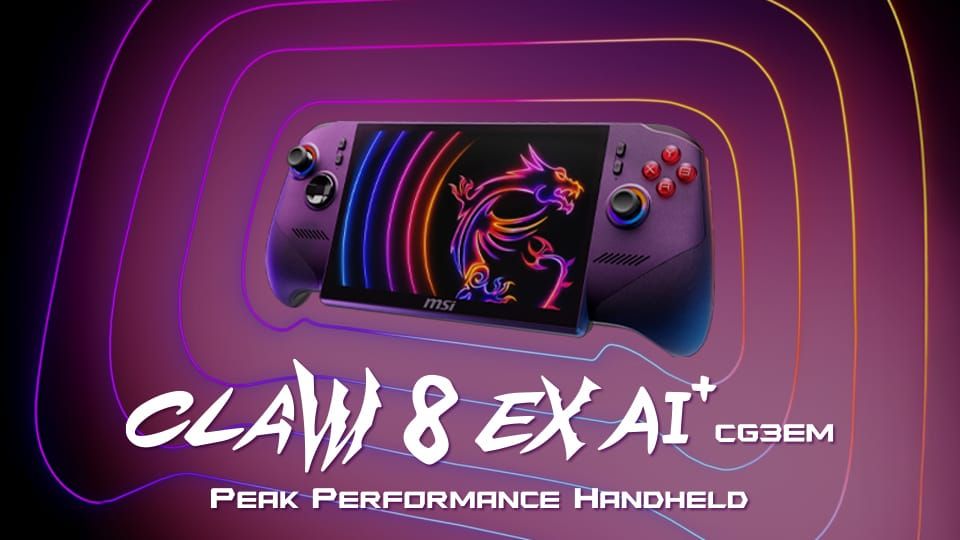
The PC gaming handheld market has changed dramatically in just a few years.
What started with devices such as the Steam Deck has turned into an increasingly competitive space filled with powerful Windows handhelds from ASUS, Lenovo, MSI, and several other manufacturers. Every generation has brought better performance, bigger batteries, and improved displays, but there has usually been some sort of compromise.
The MSI Claw 8 EX AI+ CG3EM feels like MSI trying to remove as many of those compromises as possible.
After spending time looking at what this new Claw offers, the biggest takeaway is simple: MSI and Intel have created one of the most powerful and complete PC gaming handheld packages we have seen so far.
There is just one significant problem.
It comes at a price.
Intel Arc G3 Extreme is the star of the show!
The biggest reason to pay attention to the MSI Claw 8 EX AI+ is what is inside.
MSI has continued its partnership with Intel, but this generation introduces the Intel Arc G3 Extreme processor, built around Intel's latest Xe3 graphics architecture.
This is important because previous MSI Claw handhelds showed promise, but Intel was still fighting to prove that it could compete with the AMD hardware dominating much of the handheld PC market.
The Claw 8 EX AI+ feels different.
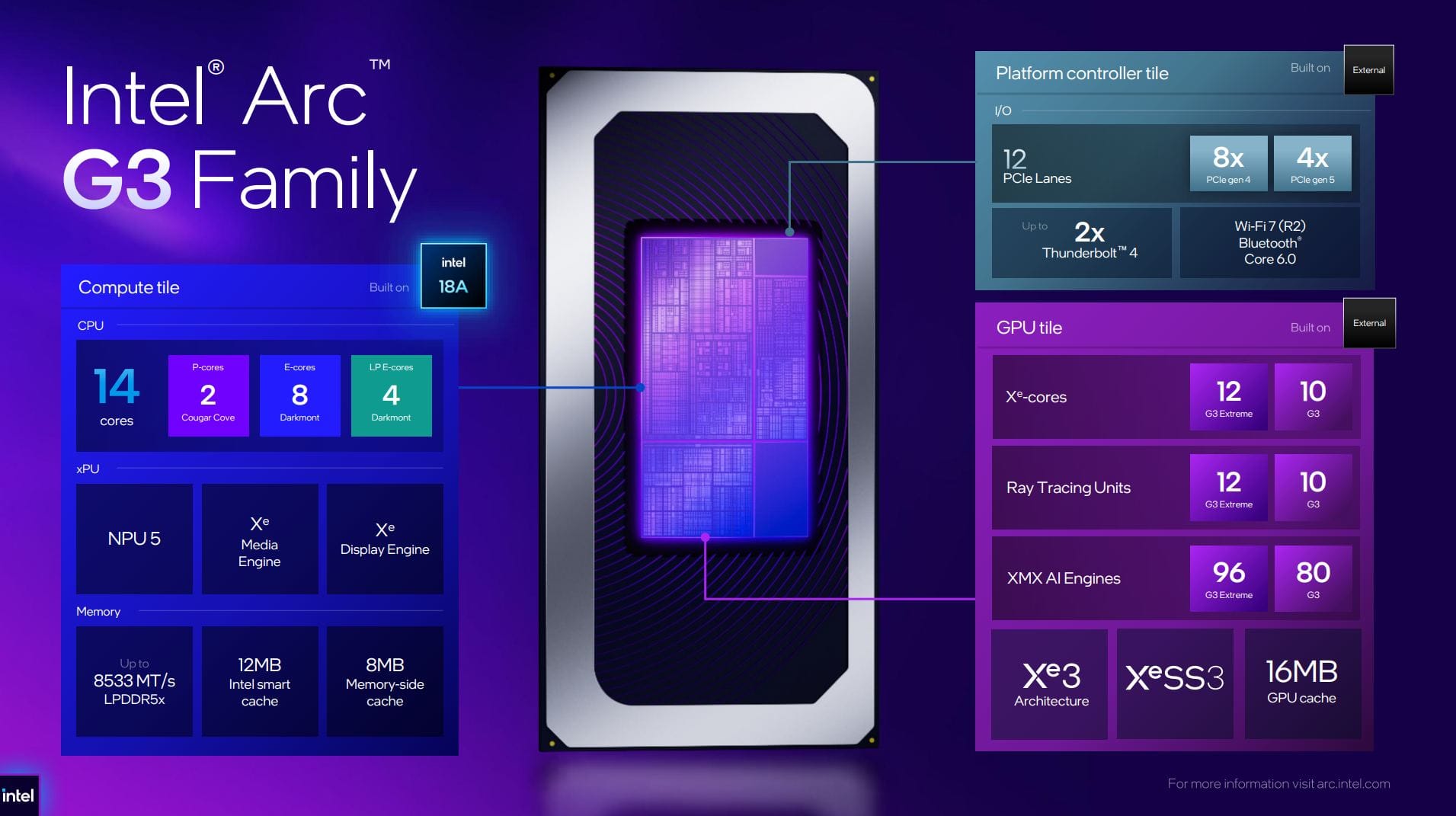
Intel Arc G3 Extreme features up to 14 CPU cores, 12 Xe cores, and support for Intel XeSS 3 technology. MSI claims the new hardware can deliver more than 50 percent higher frame rates on average compared with its previous generation under its tested conditions, with games including Battlefield 6, Hogwarts Legacy, F1 25, Diablo IV, Clair Obscur: Expedition 33, and Cyberpunk 2077 among the titles highlighted.
Those manufacturer figures obviously depend on settings, XeSS, and Multi Frame Generation, but the improvement is still significant.
More importantly, independent testing has also shown the Arc G3 Extreme competing extremely well against other high-end handheld processors. PC Gamer found the Claw 8 EX AI+ leading most of its handheld gaming benchmarks and delivering particularly strong performance against the Ryzen Z2 Extreme-powered ROG Xbox Ally X.
That is a major moment for Intel.
This is no longer a conversation about whether Intel can simply compete in the handheld market.
The conversation may now be about whether Intel has taken the performance lead.
XeSS 3 could be incredibly important for handheld gaming.
Raw performance is only part of the story.
Intel XeSS 3 has the potential to become one of the biggest advantages of the Arc G3 Extreme platform.
Handheld PCs are always fighting against the same problem. Manufacturers want better graphics and higher frame rates, but pushing more power through a handheld creates more heat and reduces battery life.
Upscaling and frame generation provide another way forward.
Rather than forcing the hardware to render every frame at the screen's native resolution, technologies such as XeSS can reduce the internal rendering workload while reconstructing the image and, in supported games, generating additional frames.
On a desktop PC with a powerful graphics card, these technologies can sometimes feel like an extra feature.
On a handheld, they can fundamentally change the experience.
Instead of dropping everything to low settings simply to maintain a playable frame rate, technologies like XeSS can potentially allow players to maintain better visual quality while still getting smooth gameplay.
When everything works correctly, you stop thinking about the technology and simply start playing the game.
That is exactly what a handheld needs.
The 8-inch display hits a sweet spot.
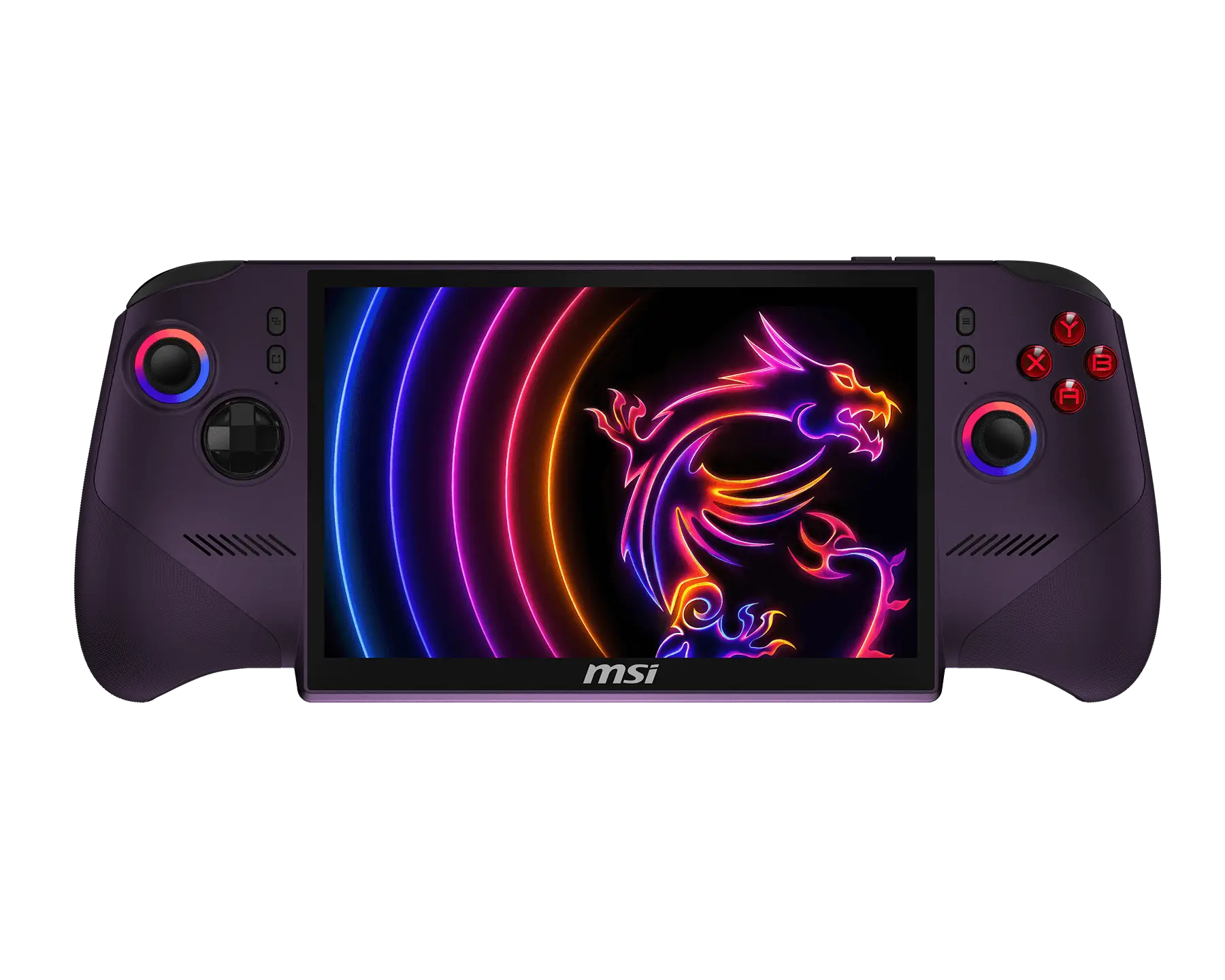
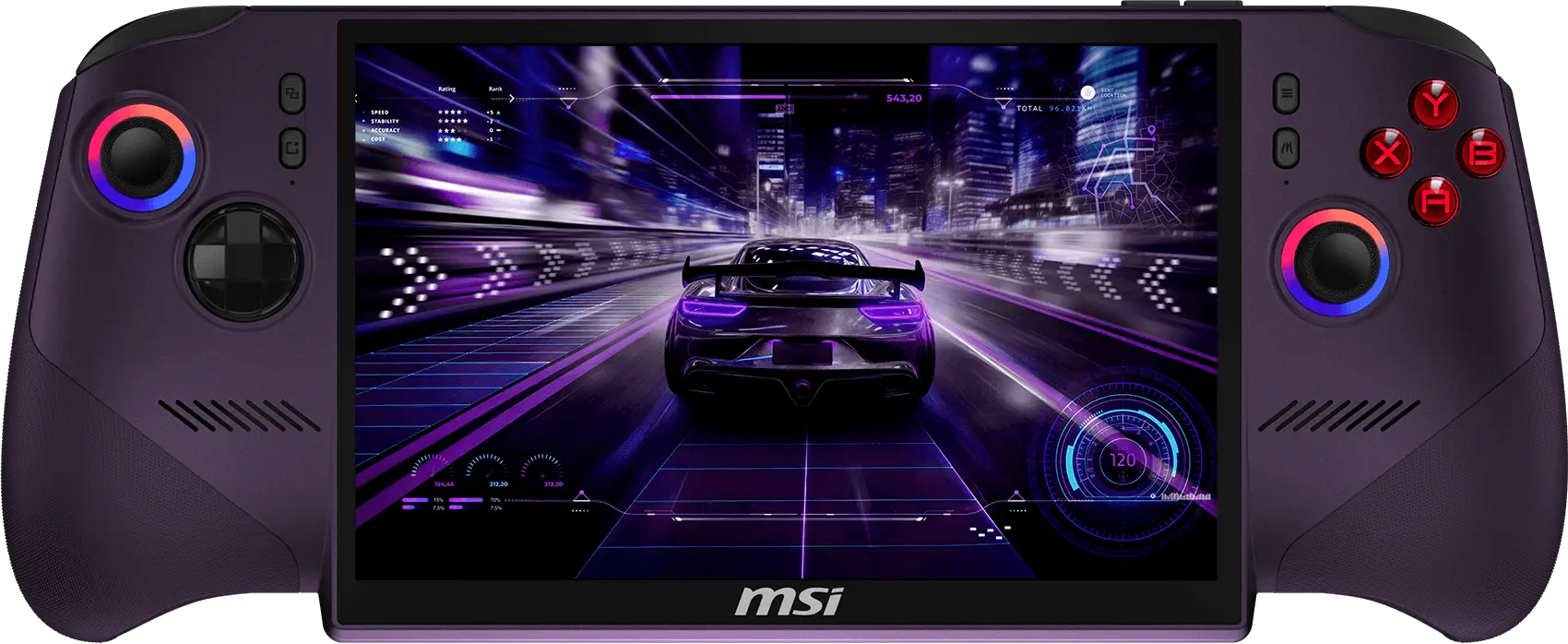
All that performance needs a good display, and MSI has equipped the Claw 8 EX AI+ with an 8-inch 1920 x 1200 IPS-level touchscreen.
It supports a refresh rate of up to 120 Hz, Variable Refresh Rate, 100 percent sRGB coverage, and brightness rated at 500 nits.
The 16:10 aspect ratio also gives players a little more vertical space than a traditional 16:9 display.
Eight inches feels like an excellent size for a premium gaming handheld.
It is large enough that games designed around television and monitor interfaces remain easy to see, but it does not push the system completely into small-tablet territory.
VRR is particularly important.
PC games rarely sit perfectly at 60 or 120 frames per second on handheld hardware. Performance can move between 40, 50, 60 FPS, or anywhere in between depending on what is happening on screen.
Variable Refresh Rate helps smooth those fluctuations and can make inconsistent performance feel significantly better.
There is one obvious omission at this price: OLED.
The display looks impressive on paper, but when a handheld crosses the $2,000 CAD mark, some players are understandably going to expect OLED.
Still, resolution, refresh rate, and VRR make this an extremely capable gaming display.
MSI finally seems to understand handheld ergonomics.
Performance means very little if you do not want to hold the device.
One of the most important improvements with the Claw 8 EX AI+ might therefore be something that does not show up on a benchmark chart.
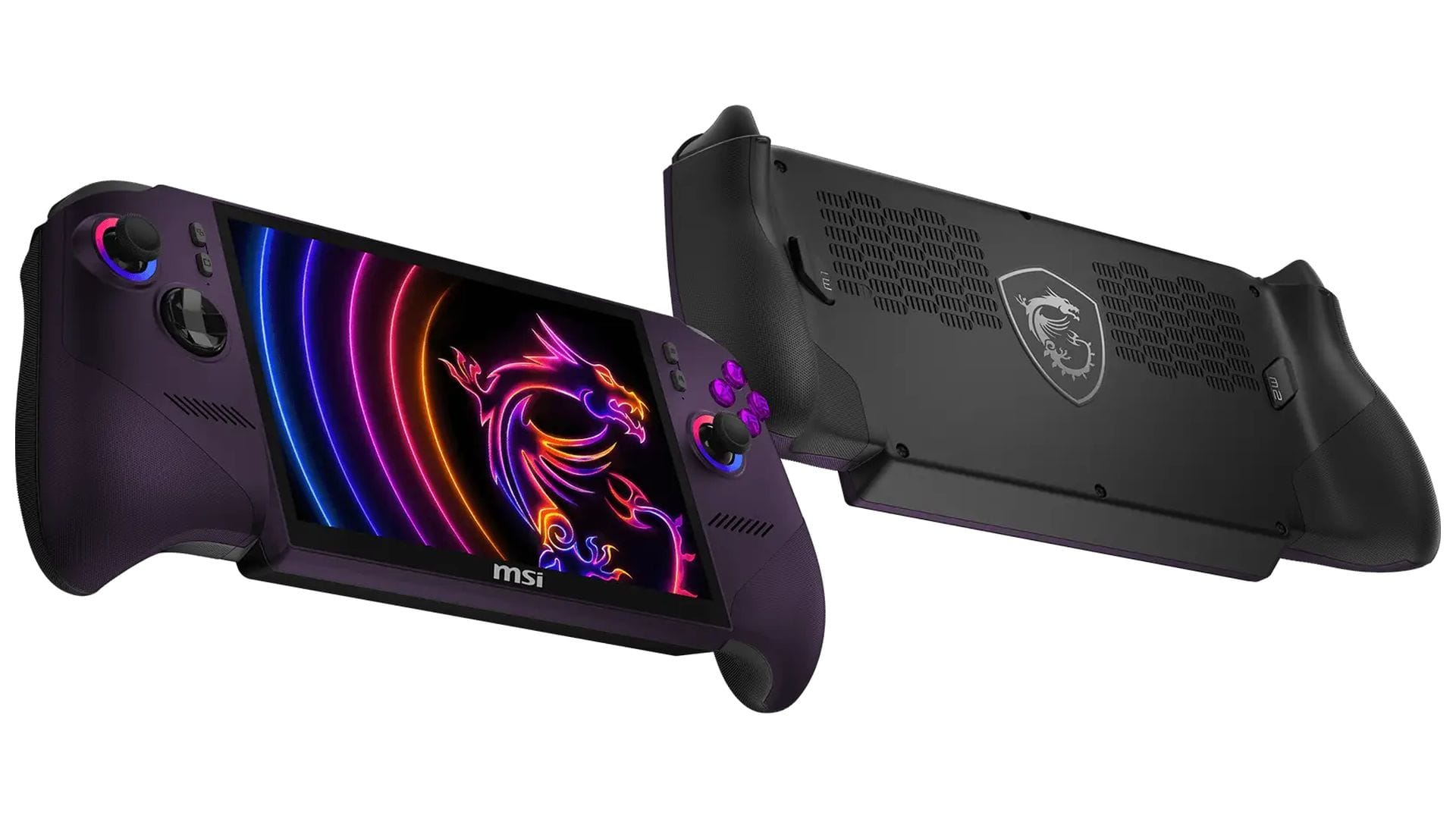
MSI redesigned the body around a more traditional controller shape.
The grips now flare outward and use contours inspired by console controllers, allowing your hands to sit in a more natural position. MSI has also added textured sections along the grips to help keep the device secure during longer sessions.
That might sound like a small improvement, but handheld ergonomics matter enormously.
The Claw weighs around 785 grams. You are going to notice that weight during a long gaming session, so distributing it properly becomes essential.
MSI has also equipped the system with Hall Effect analog sticks and Hall Effect triggers. For players worried about stick drift, that is another welcome feature, especially on a device this expensive.
There is also a new metal-dome D-pad designed to provide more tactile feedback.
Altogether, the controls make the Claw feel much closer to a dedicated gaming controller with a PC attached to the middle of it.
That is exactly what a gaming handheld should feel like.
An 80Wh battery gives all that performance room to breathe.
Battery life remains one of the biggest problems with PC handhelds.
You can build an incredibly powerful device, but that power becomes much less impressive if the battery is dead after a short gaming session.
MSI has equipped the Claw 8 EX AI+ with an 80Wh battery, putting it among the larger batteries available in this category.
The interesting part, however, is the efficiency of Intel's new processor.
PC Gamer measured 153 minutes in its standard gaming battery test and an impressive 308 minutes after enabling the Claw's Endurance mode. That is more than five hours under that particular test scenario, although real-world results will naturally depend heavily on the game, brightness, frame-rate target, and performance settings.
This may end up being one of the Claw's greatest strengths.
Handheld gaming should not always be about running at maximum power.
If I am playing a demanding game at home near a charger, give me everything the hardware can offer.
If I am travelling and playing something that does not require maximum performance, I want the ability to sacrifice some power for significantly better battery life.
Having those options makes the Claw more useful as an actual portable gaming device.
MSI Center M and Xbox Mode try to fix the Windows handheld problem.
The biggest problem with almost every Windows handheld is still Windows itself.
Windows 11 gives these systems an enormous advantage because you can access Steam, Xbox Game Pass, Epic Games Store, Battle.net, and almost any other PC gaming platform.
But Windows was designed around a mouse and keyboard.
That becomes painfully obvious when you put it on an eight-inch touchscreen.
MSI is attempting to improve the experience through the redesigned MSI Center M, which provides quick access to performance settings, controller options, macro keys, Mystic Light settings, and other handheld-specific controls.
There is also Xbox Mode, giving users a more gaming-focused interface instead of constantly navigating the traditional Windows desktop.
It still cannot completely hide the fact that Windows is running underneath everything, but simplifying those interactions makes the Claw feel considerably more like a console.
That matters.
The handheld PC that eventually becomes truly mainstream may not necessarily be the one with the highest benchmark score.
It could be the one that makes PC gaming feel as effortless as turning on a Nintendo Switch.
This is also a surprisingly capable mini PC
Another advantage of using Windows is that the Claw does not have to remain a gaming device.
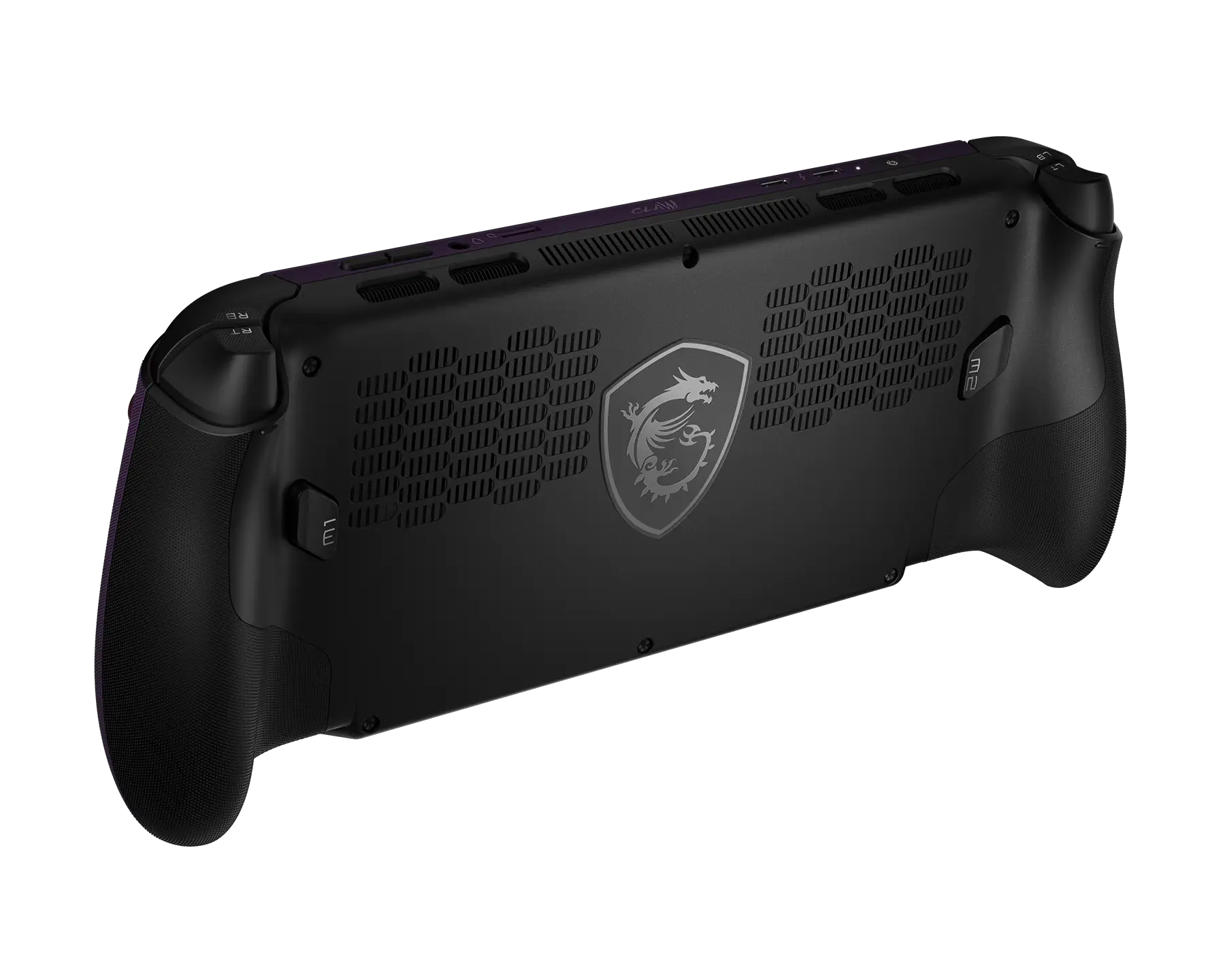
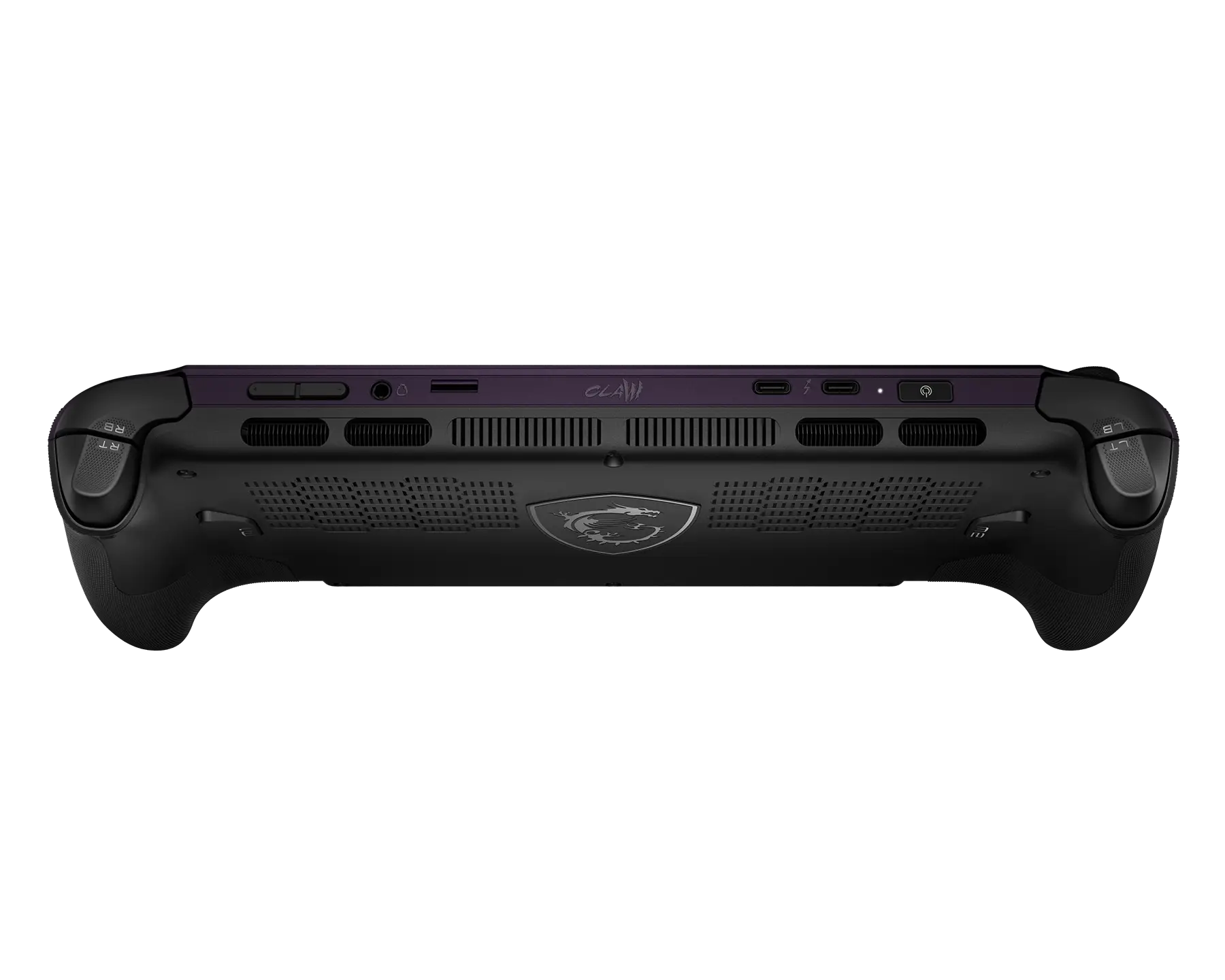
It features two Thunderbolt 4 ports, Wi-Fi 7, Bluetooth 6, a Micro SD Express card reader, and a fingerprint reader.
The standard configuration includes 32GB of LPDDR5X memory and a 1TB PCIe Gen 4 SSD.
Even better, MSI uses a full-size M.2 2280 SSD and designed the system so owners can remove the rear cover and upgrade the storage.
Connect the Claw to a monitor, keyboard, mouse, and dock, and you effectively have a small Windows PC.
That gives the device an interesting second life beyond handheld gaming.
For someone who travels frequently, being able to carry one device that handles gaming, media consumption, and regular PC tasks makes the Claw significantly more versatile.
Then we have to talk about the price.
This is where recommending the MSI Claw 8 EX AI+ becomes complicated.
In Canada, the limited launch bundle has recently been listed at $2,049.99 CAD at Best Buy Canada, while Canada Computers lists its launch-pack configuration at $2,199 CAD.
That is serious money.
At that price, the Claw stops competing exclusively against other handhelds.
Now you have to start comparing it with gaming laptops and desktop PCs and potentially buying a cheaper handheld alongside another gaming device.
That does not suddenly make the Claw bad.
Far from it.
The performance, battery, screen, controls, and overall package are what make this device so impressive in the first place.
But there is a difference between asking, “What is the best handheld?” and asking, “What handheld should most people buy?”
Those may have completely different answers.
Is the MSI Claw 8 EX AI+ the best PC gaming handheld?
From a pure hardware perspective, MSI has made an incredibly strong argument.
The Intel Arc G3 Extreme processor finally gives Intel a platform capable of fighting for the top position in handheld gaming performance.
The 8-inch 120Hz VRR display is excellent for this type of device.
The redesigned grips make the Claw more comfortable.
Hall Effect controls provide additional durability.
The 80Wh battery gives Intel's efficient hardware room to shine.
Dual Thunderbolt 4 ports and expandable M.2 2280 storage add the flexibility expected from a premium PC.
There are still compromises. Windows remains Windows. The screen is IPS rather than OLED. And the price immediately removes the Claw from consideration for a large number of gamers.
But none of those points erase what MSI and Intel have accomplished here.
The original MSI Claw felt like Intel entering a handheld PC market already dominated by AMD.
The MSI Claw 8 EX AI+ CG3EM feels like Intel kicking the door open.
For players looking for the absolute cheapest way into PC handheld gaming, this is not it.
For players looking for the best value, there are easier recommendations.
But if the question is simply which Windows handheld delivers one of the most powerful, feature-complete portable PC gaming experiences available today, the MSI Claw 8 EX AI+ deserves to be near the top of that conversation.
And for the first time, the MSI Claw might not just be competing with the best handheld PCs.
It might be the handheld everyone else now has to catch.